
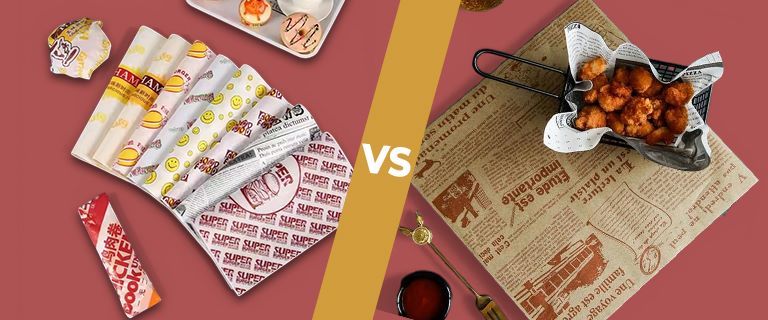
Deli paper is thin & wax-coated paper and parchment paper has a coating of silicone on it. Both papers are employed in the food industry. But what suits you better depends on your purpose. Both are widely used in kitchens and wrapping but they serve different roles. Understanding their differences helps avoid mistakes and improves results.
And if we talk about its evident usage then among food wrapping papers parchment paper holds a large market share that is about USD 79.25 billion in 2023. Deli paper is used more for wrapping sandwiches and serving food but it has a smaller market share compared to parchment paper. However, it is still useful for food wrapping.
What is Deli Paper?
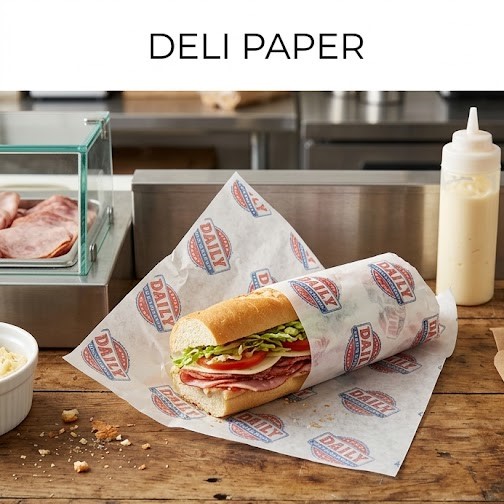
Deli paper is a thin, wax-coated or grease-resistant paper. It is designed to wrap food and prevent moisture. Moreover, it is also useful for preventing oil from seeping through. It’s commonly found in sandwich shops, delis, and butcher counters. Food businesses have the opportunity to get coated deli paper with coating on both sides.
What is Parchment Paper?
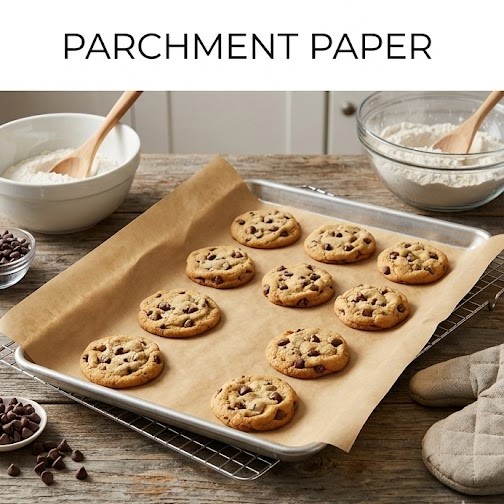
Parchment paper is a cellulose-based paper treated with silicone. A silicone coating in baking paper is applied to it to resist heat, moisture, and grease. For food it can be coated on both sides or a single side. It’s designed specifically for baking and cooking, ensuring food doesn’t stick to pans. Parchment paper can withstand high oven temperatures.
Properties of Deli Paper vs Parchment Paper
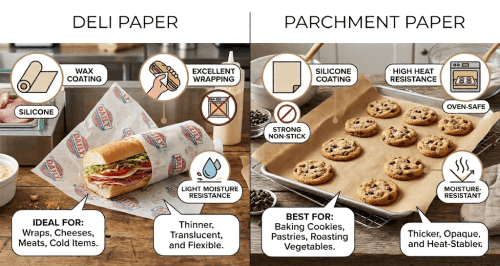
Deli paper and parchment paper serve slightly different purposes. Heat resistance is a major distinction between the two as parchment paper with designs can withstand higher oven temperatures making it suitable for baking. On the other hand, deli paper is not designed for direct oven use and is better for wrapping and storing food.
The coating also differs as deli paper often has a thin coating of wax or silicone whereas parchment paper is coated with silicone giving it strong non-stick properties.
When it comes to non-stick properties parchment paper excels. It prevents baked goods from sticking to trays and pans reducing the need for additional oils or sprays. Deli paper while slightly non-stick is primarily used to separate items or wrap sandwiches rather than for baking.
Moisture resistance is another factor that deli paper can resist light moisture making it ideal for wrapping cheeses, meats, or pastries but parchment paper is moisture-resistant and better for cooking items that release steam, like cookies or roasted vegetables.
Appearance also sets them apart as deli paper is usually thin, translucent, and flexible, ideal for wrapping while parchment paper is thicker, opaque, and comes in rolls or sheets for easy use in baking.
For baking parchment paper is always the right choice. It handles high temperatures and prevents sticking. Deli paper however, should never go in the oven as it’s designed for wrapping.
Each has a distinct role in its respective uses and choosing the right one ensures better results and prevents kitchen mishaps.
Mistakes to Avoid for a Smooth Usage in Kitchens
The use of parchment paper and custom deli paper for restaurants is seen more evidently. This shows that chefs and restaurant owners use them daily. However a common mistake is using deli paper in ovens. Its wax coating melts under heat, creating smoke and ruining food. Another error is substituting parchment paper for wrapping oily foods in storage, as it doesn’t perform well in freezers. Matching the paper to its purpose saves both effort and food quality.
Deli Paper Sheets are Preferred Over Parchment Paper
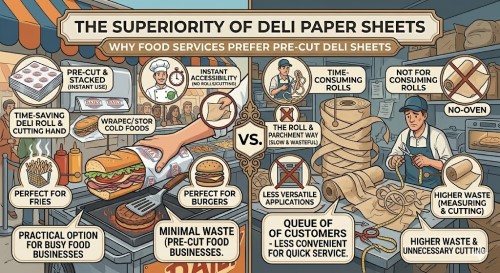
Pre-cut deli paper sheets are convenient for quick use in kitchens. They save time compared to rolls and are perfect for sandwiches, burgers, and fries. Sheets also minimize waste, making them a practical option for busy food businesses.
Ending Thoughts
Deli paper and parchment paper both serve important purposes. You can select either of the papers depending on your household or business needs. Knowing where each fits avoids costly mistakes and ensures food safety, quality, and convenience.