
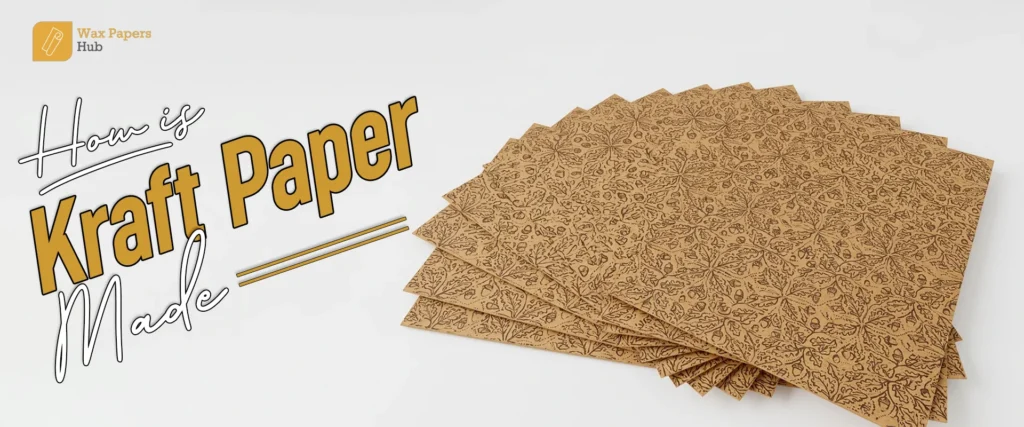
The manufacturing material that is now used by most brands because of its eco-friendly nature is kraft paper. It’s a highly durable material. The brown paper bags used mostly at grocery stores are made of kraft paper. That is why they have very high strength. The reason lies in the materials used and the making of kraft paper. In this blog, we will learn about the raw materials and the How is Kraft Paper Made.
What is kraft paper?
The name Kraft is derived from a German word that means “strength.” Kraft paper has very high strength. It is a very strong material made in machines using wood pulp. This is not like regular paper.
One reason is that bleaching regular paper breaks the strong bonds. But kraft paper does not undergo this whitening. There are two types of fibers present in wood:
- Lignin
- Cellulose
Lignin is hydrophobic and disturbs the bonds between cellulose during manufacturing. But in making kraft paper, it is removed, which helps the cellulose fibers develop stronger bonds.
Raw materials used in making kraft paper
Before the manufacturing process is started, raw materials are first sourced. The plus point of making kraft paper is that it can process any type of fiber. The following are some of the commonly used fiber types:
Softwood fibers
These types of fibers take more time to grow. These are present in trees such as pine, spruce, and many others. These take time to grow and develop slowly. The fibers wrap tightly around each other and form very strong bonds. This resists tearing under high pressure.
Hardwood fibers
These are the type of fiber that don’t have the strength of softwood fibers. But the manufacturers blend them in the pulp mixture to add smoothness and flexibility to the materials. It is also used to improve printability. Eucalyptus, birch, and other trees are included in this fiber type.
Recycled fibers
Many modern industries utilize used cardboard boxes, scrap paper, and non-wood residual wastes. This helps to use resources sustainably and also doesn’t rely entirely on wood.
Pulping chemicals
There is a liquid that is used in the mill, which plays a major role in the making of kraft paper. This is called white liquor. It is made of the following chemicals:
- Sodium hydroxide
- Sodium sulfide
How is kraft paper manufactured?
The process to convert a standing tree or used boxes into custom kraft paper is done through a series of steps. Below is the process for making kraft paper:
- Wood preparation and chipping
The first step is chipping the heavy trunks through the debarking drums that cut the outer rough surface of the trees. After that, the bare wood is cut into small, uniform chips measuring 12 to 25 ml in length and 2 to 10 ml in thickness. It is essential to cut the wood into small sizes so that they are not under- or overcooked in the next phase.
- Chemical cooking
This process is also known as digestion. The precisely cut chips are then put into the digester. This is a pressurized, massive vessel. Here, the white liquor is added. The temperature is raised to almost 170 to 178°C under a high pressure of 110 to 150 PSI. It is cooked for 3.5 to 4 hours.
- Fiber separation
Once the cooking process is completed, the workers open a pressure-releasing valve at the base of the digester. This creates a sudden drop in pressure, and the fibers explode. This results in the separation of the cellulose fibers from the lignin.
- Washing and chemical recovery
The resulting mixture from the previous step consists of a mixture of thick and dark cellulose fibers and a black liquor, which is the byproduct. It is then passed through a washer that uses high-end technology to replace the black liquor with hot water. The fibers are then moved through the centrifuge machine to remove any extra particles. The waste liquor is then moved into a recovery boiler and evaporation system. This generates the steam, which is used to run the mill.
- Optional bleaching
The pulp then moves into the paper machine for unbleached paper. However, for the making of bleached paper that is best for printing vibrant colors, the paper has to undergo bleaching. It is done using chlorine dioxide, hydrogen peroxide, and oxygen.
- Refining
Before the pulp is moved into the paper machine, a machine uses different rotating plates to brush and flatten the individual fibers. This helps to make the bonds stronger between the fibers when the sheets dry.
- Sheet formation and drying
The pulp is mixed with water, and a mixture is formed. It is then passed through different moving screens that drain the excess water out, and the fibers form a sheet. Rollers then press these sheets to remove extra water. To make the sheets completely dry, a temperature of 300 ℉ is applied inside the machine. This results in the formation of dry sheets of kraft paper.
Types of kraft paper
There is demand for different types of kraft paper in the industry based on different needs. Below are some of the types of kraft paper that are made by changing the mixtures and adding different types of coating:
| Types of kraft paper | Fiber source | Coatings | Best use for |
| Unbleached | Softwood pulp | None | Corrugated boxes, |
| Bleached | Hardwood and softwood blend | Chlorine-free bleaching | E-commerce and retail shopping boxes |
| Recycled | Consumer waste cardboard | Decontamination washing | Box liners, Kraft food paper bags |
| Wax-coated | Virgin kraft base | PE or wax coating | Custom greaseproof paper, industrial liners |
Uses of kraft paper
As kraft paper is very strong, it has uses in many different industries. Some of the major ones are mentioned here:
E-commerce logistics
It is used for making shipping boxes and protecting fragile items during transport.
Industrial product packaging
They are used for making large sacks for storing different industrial goods such as cement, flour, seeds, and many more.
Food service packaging
Kraft paper is used for making different bags, boxes, and custom food papers.
Retail branding
Many high-end boutique shops use kraft paper for making different types of wrapping paper or even boxes to present their products.
How is kraft paper recycled?
This is naturally biodegradable. For the recycling of this paper, there are plants that yield maximum benefits. Here is how it is recycled:
Collection and sorting
The municipal teams gather the waste and separate it. This removes the extra heavy contaminated sheets and papers.
Transportation
It is them that are transported to the recycling plants.
Hydrapulping
The separated waste is then put into the hydrapulper. Warm water and chemicals are added, and mechanical agitation is used to make the slurry. It is then passed through the filters to remove any glue or ink before it is fed into the paper machine.
Conclusion
Kraft paper ensures that you don’t have to compromise on paper quality while making eco-conscious packaging. This is best for different types of businesses. If you have a business whose priority is sustainable, eco-friendly packaging, then you should go for kraft paper. You can order custom kraft paper at wholesale rates at Wax Papers Hub and enjoy many other benefits.