
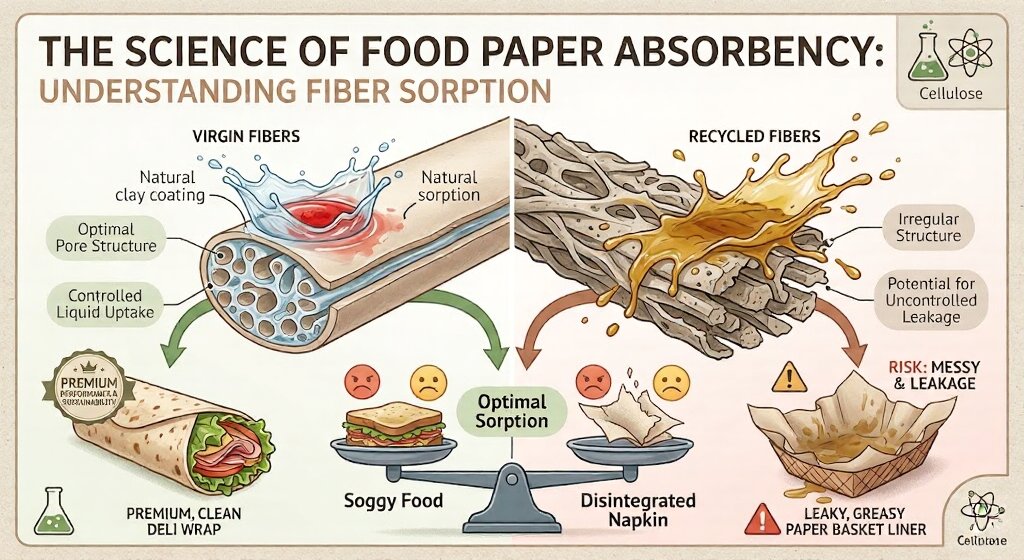
One of the key factors that determines how well custom food wrapping paper works is something called fiber sorption. It’s the process that decides how much liquid the fibers in paper can take in and it directly affects the absorbency of food-related papers.
Earlier fiber was referred to in simpler terms like cellulose or roughage. But after that research on fiber sorption properties including water adsorption became more prominent in the late 20th century. In this blog let’s dive deeper into what fiber sorption really means and why it matters so much in the food industry.
What Is Fiber Sorption?
Fiber sorption refers to a paper’s capacity to absorb and retain liquids like water, oils, or other fluids. This property impacts the paper’s performance in printing and packaging by influencing its liquid interaction behavior.
Since most food paper products are derived from cellulose fibers their structure, porosity, and surface chemistry determine how they respond to liquids.
Why Does Fiber Sorption Matter in Food Paper?
Many types of paper are commonly used for food wrapping across restaurants, cafés, households, and food chains. So they should all be strong enough to provide effective absorption. Paper absorbency isn’t just about convenience it’s about functionality, safety, and even customer satisfaction. Here’s why it’s important:
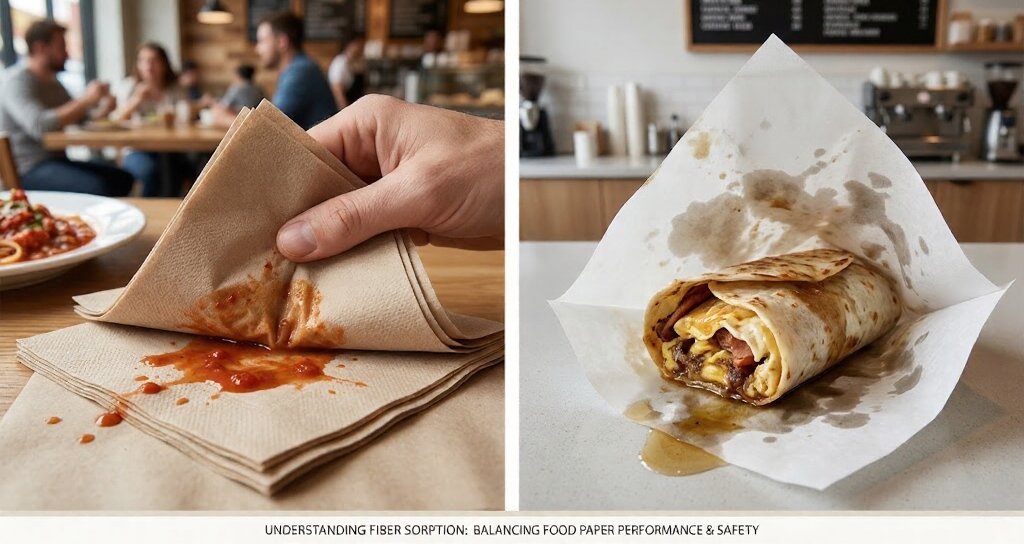
Performance in Daily Use Nobody wants a napkin that falls apart the moment it touches grease or water. It becomes a paper that has no use. So with the proper fiber sorption ability in it the papers ensure durability and are effective at soaking up spills.
Food Safety The wrong type of absorbency could cause issues. For example if the packaging absorbs too much oil. Then it might leak and create hygiene concerns. On the flip side low absorbency may leave food soggy and unappealing.
So there must be a balance of all the properties that make certain food papers align with fiber sorption ability and have an impact on absorption in the food industry.
Types of Food Papers That Have the Ability of Fiber Sorption
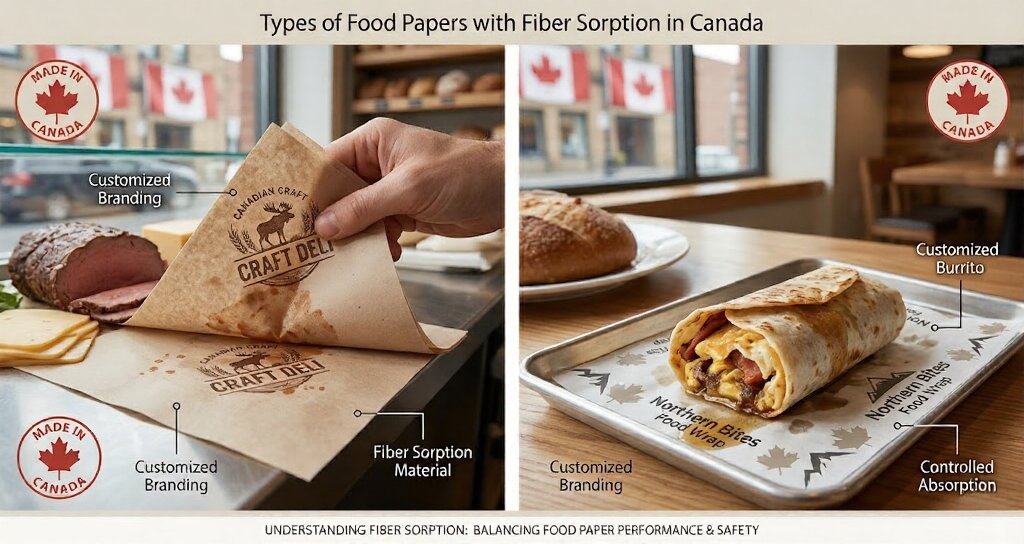
There are many manufacturers of food wrapping paper all over Canada. So choosing the right partner for customized paper wrapping for your brand is important as well. Plus if you decide to purchase it the paper must have proper absorbency. The most common types of paper that have fiber sorption include:
- Custom printed deli wrap paper
- Custom food paper
- Others
Factors That Affect Fiber Sorption in Its Ability to Absorb
Not all paper is created equal. Each type has different properties and is designed for specific purposes. The level of absorbency depends on several factors:
For readers who want to learn more about the basic structure and materials of paper — including how cellulose fibers and paper properties influence absorbency you can visit the paper structure and absorbency
Fiber Type: It is made of softwood fibers that are long and strong and create smoother paper surfaces. A mix is often used to balance strength and absorbency.
Refining Process Is Important: When fibers are refined, they swell and create more surface area which enhances sorption. However, too much refining can make paper too dense, reducing absorbency.
Additives and Coatings: For example as we all know that the paper liners for food baskets are the papers that are coated with wax, plastic, or other treatments to resist moisture. In those cases absorbency is deliberately reduced like in burger wraps or coffee cups. However the basket liners for burgers still contribute to absorbency.
Pore Structure: The tiny spaces between fibers act like channels for liquids. More open structures generally mean better absorbency.
Scientific Relationship of Sorption with the Food Packaging Industry
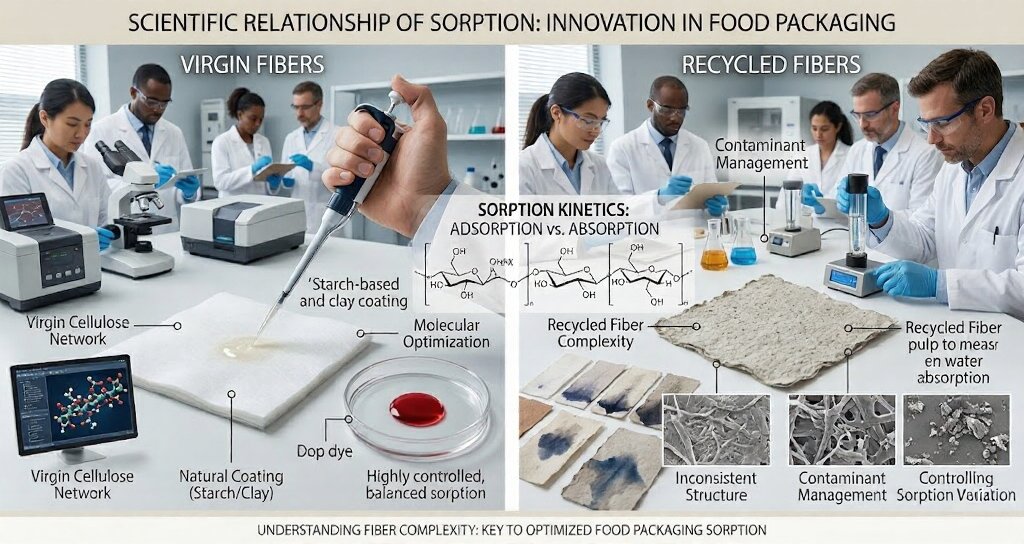
One of the most exciting areas of research in food packaging today is how to optimize fiber sorption. All without relying on plastics or harmful chemicals. With increasing pressure to create sustainable and biodegradable packaging all over the world so scientists from different countries are experimenting with natural coatings and treatments. For example the newest examples are starch-based or clay coatings that can help balance absorbency.
Additionally recycled fibers play an important role. They often have different sorption characteristics compared to virgin fibers so understanding and controlling their behavior is crucial.
The Consumer Perspective Based on Usage
At the end of the day the science of fiber sorption directly shapes how we experience food. Imagine greasy pizza dripping through flimsy paper or flimsy napkins that tear mid-use. These frustrations all come back to the quality of fiber absorbency. When done right fiber sorption ensures a product feels premium and reliable. Thus they play a crucial role in food absorption.
Words to Conclude
Fiber sorption may sound like a technical term but its impact is something we all feel in our daily lives. Nowadays the paper absorbency in which you wrap the food products is really something that matters. It’s important to highlight and notice that thing before buying as well.